
🚀 DocRepute is in early access — free to startGet early access →
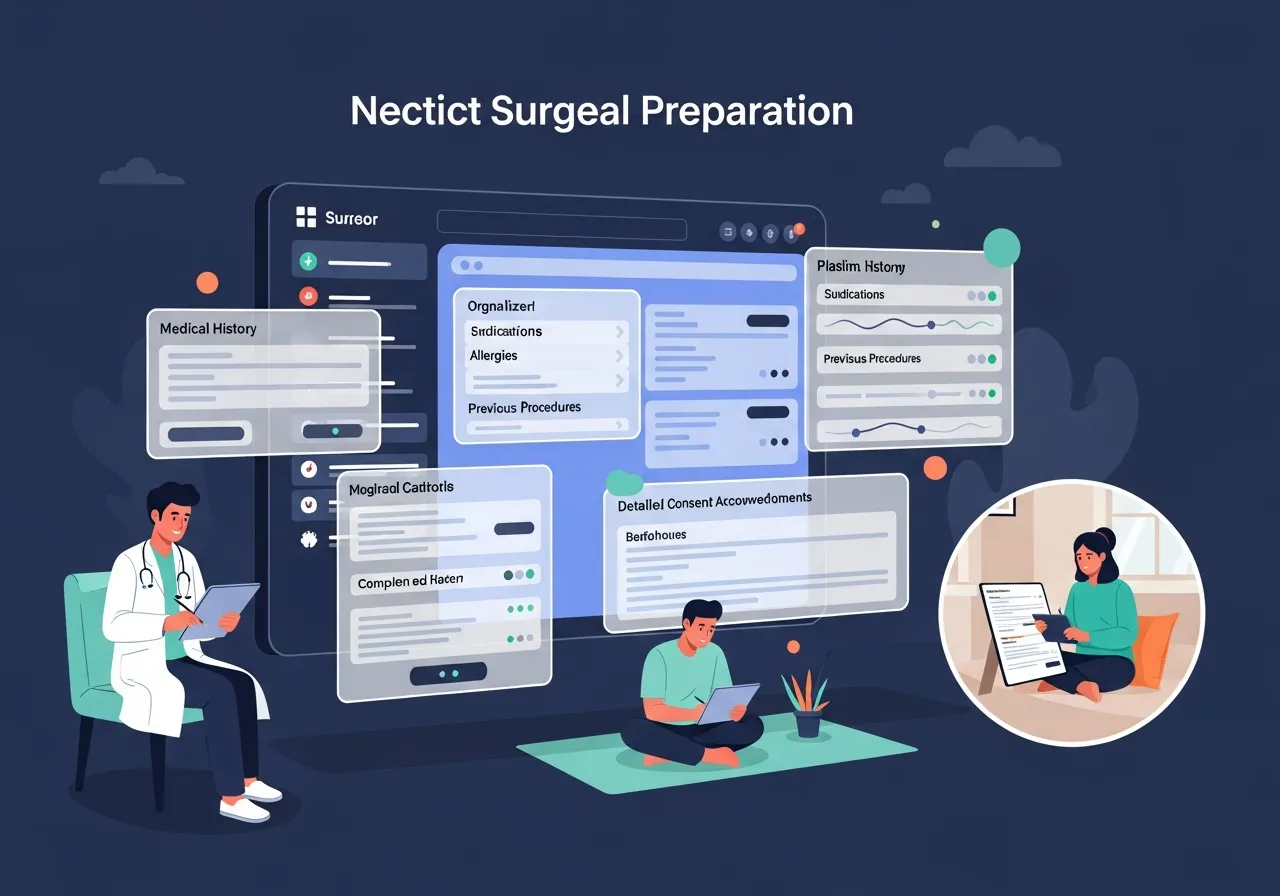
Plastic surgeons illustration
✨ Early access — free to start

Plastic surgery patient forms, built as one editable packet

One administrative packet for a consultation clinic: registration, medical history, and a US Letter PDF you can print today. Free to edit, no signup, and the same document becomes your digital intake whenever you are ready.

D
M
R
S
Join healthcare practices on the waitlist

One office, two completely different front doors

A plastic surgery practice runs two administrative paths out of the same reception desk, and generic paperwork serves neither of them well. The cosmetic side is elective and self-pay: the person filling in the packet is booking a consultation, has no claim to file, and is being asked at length for coverage details that will never be used. The reconstructive side goes the traditional route: there is a referring physician, there are records to request, and the details that were pointless an hour ago are suddenly the ones that matter most. Most plastic surgery patient forms you find online are a single medical-history PDF that ignores the distinction entirely, so the front desk keeps a second document in a drawer and staples the two together. What a consultation clinic actually needs is one editable patient packet: ask the referral questions only when there is a referrer, drop the coverage block for a cosmetic consultation, and keep the medical history identical across both, because that part genuinely is the same.

  • Built for HIPAA-compliant workflows

  • Free to start — 50 patient actions each month

The packet is already filled in when you open it

You do not start from a blank canvas. The preset loads populated and ready to read. The plastic surgery registration form section covers the administrative essentials: patient and contact details, date of birth, emergency contact, how they heard about the practice, the referring provider where there is one, and responsible-party and coverage details you can remove in two clicks for a self-pay consultation. The patient history forms section carries the general medical history a surgical practice keeps on file — current medications and supplements, allergies, previous surgeries and any past experience with anesthesia, current health conditions, and whether the patient smokes. Everything is editable without an account. Rename a section, rewrite a question in your own words, add the one your surgeons always end up asking by hand, mark a field optional, reorder the lot, duplicate a section for a second responsible party, and delete whatever does not apply. It is a starting point built for a plastic surgery office rather than a generic form with the specialty name swapped in at the top.

A PDF you can print today, and one that keeps up with your edits

The default packet is available as a PDF the moment the page loads. No signup, no email wall, no waiting for a download link to arrive. It is laid out for US Letter with real writing space, so the printed version is something a patient can complete with a pen on a clipboard rather than a wall of eight-point type with quarter-inch lines. Edit anything and the original PDF is withdrawn and a new one generated from the packet as it now stands — which sounds obvious until you have used a builder that quietly hands back the unedited default after twenty minutes of work. The point is that you leave with something usable. Print the packet for Thursday's consultations if that is all today needs. The digital version of the same packet, where the patient completes it on their phone before arriving and the answers land structured and legible for your coordinator, is the next step whenever you want it — and it is the same document either way, so nothing has to be rebuilt to move.

Thursday consultation clinic, two surgeons

A two-surgeon practice books its consultations into Thursday: nine appointments, six cosmetic and three reconstructive. The old routine had everyone receive the same eight-page packet, with the coordinator spending Wednesday afternoon striking out the sections that did not apply and phoning the reconstructive patients for referring-physician details the form never asked for clearly. The practice now keeps two versions of one packet. The cosmetic version drops the coverage block entirely and asks how the patient found the practice, which turns out to be the question the marketing budget depended on and nobody had ever collected properly. The reconstructive version keeps the coverage block and asks for the referring provider and which records to request. Both share an identical medical history section, so a change to the medications question is made once rather than twice. Thursday now starts with nine completed packets and a coordinator whose Wednesday went on conversations that mattered.

After the consultation: feedback you own, reviews asked for neutrally

The packet is the first touch. The rest of the patient's experience is where an elective practice actually competes, and the DocRepute workflow being built for launch connects the two. A short patient survey after the consultation or the procedure tells you what the visit felt like from the other side of the desk — the wait, how well the coordinator explained things, whether the follow-up call happened — and it comes back to you privately, in your own hands, before it becomes anybody else's opinion. Separately, every eligible patient receives the same neutral invitation to leave a Google review, whatever they said on the survey and whatever your team thought of the visit. No sentiment routing, no filtering, no invitation held back because somebody seemed unhappy, and nothing a patient told you privately is ever copied into a public review. For a specialty that lives on reputation, that neutrality is worth more than it costs: the profile ends up resembling the practice, and the process is one you can describe out loud to anyone who asks how you collect reviews.

Where the packet stops

This is an administrative packet, and being precise about that is the point rather than a caveat. It does not assess whether anyone is a suitable candidate for a procedure, does not recommend or compare procedures, and does not describe risks, alternatives, or what happens before and after an operation. Those are clinical judgements, and they belong to your surgeons and their team, in a consultation, with the patient in the room. It is also not a consent document. Consent for a specific procedure is a separate, procedure-specific form that your surgeons and your own counsel own; where you need one for injectables, start from the dedicated botox consent form template rather than bolting a paragraph onto a registration sheet. DocRepute is a patient-experience layer, not an EHR or practice-management system — no scheduling, no billing, no clinical charting — and it is designed to sit alongside whatever you already run rather than ask you to replace it.

What it costs, and where DocRepute is right now

The packet, the editing and the PDF cost nothing and need no account. DocRepute itself is pre-launch and in validation, gathering interest from practices before the full application opens, so the digital intake workflow, surveys and neutral review requests described here are what early-access practices are signing up for rather than a production service running today. The access model at launch is already settled: the free plan includes 50 action credits a month, and a credit is used only when a patient completes a regular intake submission or a standard survey — building, editing and publishing forms and surveys costs nothing, and the free plan has no AI. Paid plans add AI intake that asks practice-approved follow-up questions, conversational surveys, and sentiment and topic analysis of the feedback. DocRepute is HIPAA-focused and built for HIPAA-compliant workflows, with a BAA planned to be available at launch. Take the packet today, and join early access for the workflow around it.

Get early access

Be first to use DocRepute when it launches — including AI intake and conversational surveys on paid plans.

  • Free to start — 50 action credits a month
  • Building and publishing forms uses none of them
  • No card, and no sales call booked

No spam, ever. Unsubscribe anytime.

Frequently Asked Questions

It gets the administrative side of a consultation done before the patient sits down: who they are, how to reach them, who referred them if anyone did, and the general medical history a surgical practice needs on file — medications, allergies, previous surgeries and anesthesia history, current conditions. Because it is editable, a practice can run one packet with two faces, dropping the coverage block for a self-pay cosmetic consultation and keeping it for a reconstructive referral, instead of maintaining two unrelated documents that drift apart.

View raw text version for AI/LLMs