🚀 DocRepute is in early access — free to startGet early access →
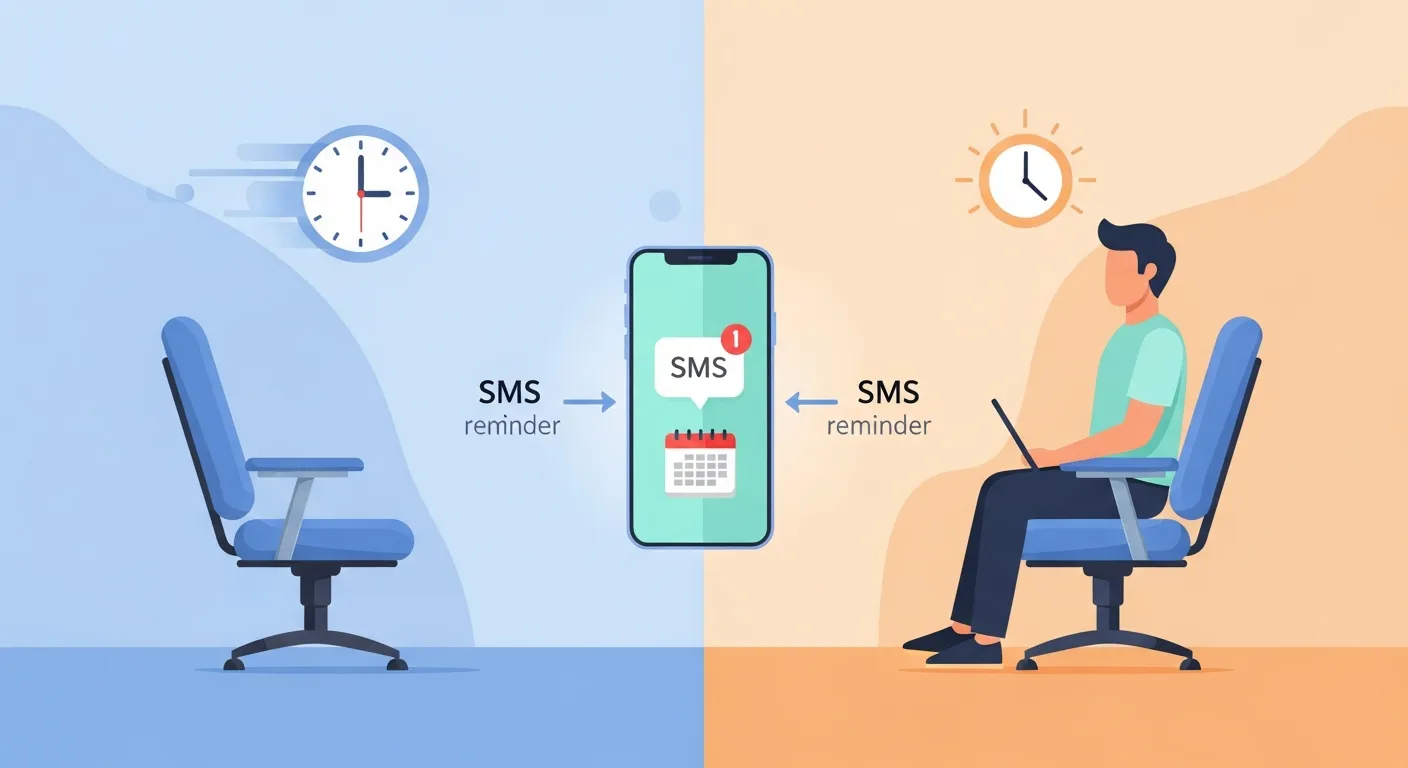
Automated SMS reminders illustration
✨ Early access — free to start

HIPAA compliant text messaging to patients starts with what you leave out of the message

Native DocRepute messaging is planned and coming with early access. The rules that make a patient text safe are not waiting for us — and the most important one is that a phone screen is not a private place.

D
M
R
S
Join healthcare practices on the waitlist

The lock screen is the part nobody plans for

Ask a practice what worries them about texting patients and you will hear about encryption. Ask what actually goes wrong and it is a notification preview on a phone lying face-up on a kitchen table. Phones get shared, screens light up in front of whoever happens to be in the room, and a message that names your clinic can disclose the fact of care to somebody the patient never told. That is why HIPAA compliant text messaging to patients is far less about the pipe than about the sentence: what the message says, who it names, and what it makes visible before anyone has unlocked anything. Get that right and a text is one of the least intrusive ways to reach a patient — no hold music, no voicemail, answered on the bus. Get it wrong and no amount of transport security helps you, because the disclosure already happened on the surface of the phone. Native DocRepute messaging is planned and part of early access rather than running today, but the rules below are not waiting on us, and they are worth applying to whatever you use in the meantime.

  • Built for HIPAA-compliant workflows

  • Free to start — 50 patient actions each month

Four things that make a patient text defensible

Consent comes first. A patient has to have agreed to be contacted by text, at a number they confirmed, and that agreement needs to sit somewhere you can find it a year later rather than in the memory of whoever asked. Second, an opt-out that actually works: every message carries a plain way to stop, stopping takes effect immediately, and it applies across the whole workflow rather than only to the message type that annoyed them — a patient who opts out of survey invitations should not carry on receiving review requests. Third, minimal PHI, which is the discipline the section above was really about. Say who the message is from and what to do, never why. Your appointment on Tuesday, not your oncology follow-up on Tuesday. Where the content genuinely has to be specific, the message carries a link to somewhere the patient authenticates rather than carrying the content itself. Fourth, keep the record: what went out, to which number, when, and on what consent, because nobody is ever asked that question on a good day. Those four are what HIPAA-focused text reminders look like in practice, and not one of them is a technical problem.

The sender name is a disclosure too

For most practices the clinic name on a text is harmless. For some it is the entire disclosure. A message headed with the name of a behavioral health practice, an addiction medicine program, a fertility clinic or an infectious disease service tells anyone who glances at that phone something the patient may have told nobody at all — and it does it before the message is even opened. The fix is unglamorous rather than clever: let the practice choose the name that appears, keep the body generic, and let the patient decide how much detail they want by opening a link rather than by receiving it. Planned DocRepute messaging is designed around that from the start — configurable sender identity, message patterns that carry a purpose and a link instead of a clinical subject, and no message type that requires you to name a condition to make sense. It also means being realistic about what a text is for. If the content genuinely needs privacy, a text is the doorbell, not the room.

What DocRepute will send, and what it is not for

Worth being precise here, because automated SMS reminders means something different on this page than it does on a scheduling product. DocRepute does not hold your appointment book — it is a patient-experience layer rather than a practice management system — so it is not the thing that texts a patient to say they are due at nine on Tuesday. What it is planned to send are the messages that belong to its own workflows: an invitation to complete digital intake before the visit, and a nudge to the people who have not; survey invitations after the visit; neutral review requests to eligible patients; and the routine notifications that go with all three. In practice that is the reminder that rescues your morning anyway. Almost nobody is standing at your front desk because a patient forgot the appointment. They are standing there because nine pages of paperwork are being filled in on a clipboard while the room sits empty and the clinician waits.

How the workflow is planned to run, step by step

Step one: the practice publishes a form or a survey and chooses when its invitation goes out — three days before the visit for intake, say, and the morning after for a survey. Step two: DocRepute checks that the patient is eligible and has consented to be texted. Nobody without consent is contacted, and an opt-out removes them from the list rather than flagging them for someone to notice later. Step three: the message goes out with a short, generic body and a link. Step four: the patient opens the link and completes the intake or the survey on their own phone at their own pace, and the answers arrive in your dashboard structured rather than as a photograph of a clipboard. Step five: whoever is on the desk can see who has completed and who has not, and send one follow-up instead of making eleven phone calls. Step six, on the survey path: an eligible patient can be offered the same neutral review request as every other eligible patient, with no filtering by score, sentiment, topic or how the visit felt to staff. Staff set the rules and staff read the results. The messaging never makes a decision about a patient.

A pain management clinic on a Monday

Take a two-clinician pain management clinic seeing around forty new patients a month. Their intake pack runs to nine pages, and before Monday clinic somebody used to spend the tail end of Friday ringing new patients to remind them to arrive twenty minutes early with the paperwork done. Half of them arrived without it. In the planned workflow the invitation goes out on Thursday morning to everyone booked for Monday who has consented to text: two lines, the clinic's chosen sender name, no mention of pain management anywhere in the message, and a link. On Friday, one nudge to the seven who never opened it. By Sunday evening the front desk can see the two who are still outstanding and call those two rather than all forty. The real gain is not the twenty minutes at the door. It is that the medication list arrives typed, in the patient's own time, instead of being reconstructed at the desk from memory while a queue forms behind them.

What we are not going to invent while this is being built

Native messaging is planned and part of early access rather than live today, and there are things we will not make up in the meantime. We are not naming a messaging provider before the contract is signed, because a logo we might change is worse than a blank line. We are not publishing message allowances or pricing for a channel that is not open — the honest answer to what it will cost is that it is not decided. We are not quoting delivery or open rates: carriers filter, numbers change and phones get switched off, so anyone quoting you a delivery percentage is quoting an average from somebody else's traffic. And we are not claiming two-way conversation. DocRepute is not a messaging inbox and not a clinical chat channel, and a patient who needs to talk to you should be reaching your practice line, not a notification workflow. Saying all of that costs us a few bullet points in a comparison table and buys something we would rather have, which is a page you can believe the rest of.

The narrow version is the point

If what you need is appointment reminders driven from your schedule, two-way texting with the front desk, secure clinical chat between clinicians, marketing broadcasts or billing notifications, DocRepute is not that product and pointing you at it would waste your time. There is no scheduling module, no billing, no charting and no EHR write-back, and none of them are being bolted on to look broader in a feature grid. What DocRepute does is the patient-experience layer: intake before the visit, feedback after it, and a neutral invitation to review for every eligible patient — with messaging as the thread that connects the three rather than as a product of its own. Practices that already run a scheduling system they like tend to find that focus is exactly what they were after. The access model behind those workflows is settled: 50 action credits a month on the free tier, spent only when a patient completes a regular intake submission or a standard survey, with building and publishing costing nothing. DocRepute is HIPAA-focused and built for HIPAA-compliant workflows, with BAA availability planned at launch — a statement about how it is designed rather than a certificate, because no vendor makes a practice compliant on its own. Early access is open, and the free healthcare form builder is live today if you want to see the intake half working before you commit to anything.

Get early access

Be first to use DocRepute when it launches — including AI intake and conversational surveys on paid plans.

  • Free to start — 50 action credits a month
  • Building and publishing forms uses none of them
  • No card, and no sales call booked

No spam, ever. Unsubscribe anytime.

Frequently Asked Questions

It is not a certificate you can buy, and no text message is compliant on its own. The phrase describes a set of practices: the patient consented to be contacted at that number, there is a working opt-out you honor across every message type, each message carries the minimum information needed and never a clinical subject, anything sensitive sits behind a link the patient has to open, and you keep a record of what was sent and on what basis. HIPAA compliant SMS messaging also depends on your agreements — a vendor sending on your behalf is a business associate and should sign a BAA. DocRepute is HIPAA-focused and built for HIPAA-compliant workflows, with BAA availability planned at launch; native messaging itself is planned rather than live.

View raw text version for AI/LLMs