🚀 DocRepute is in early access — free to startGet early access →
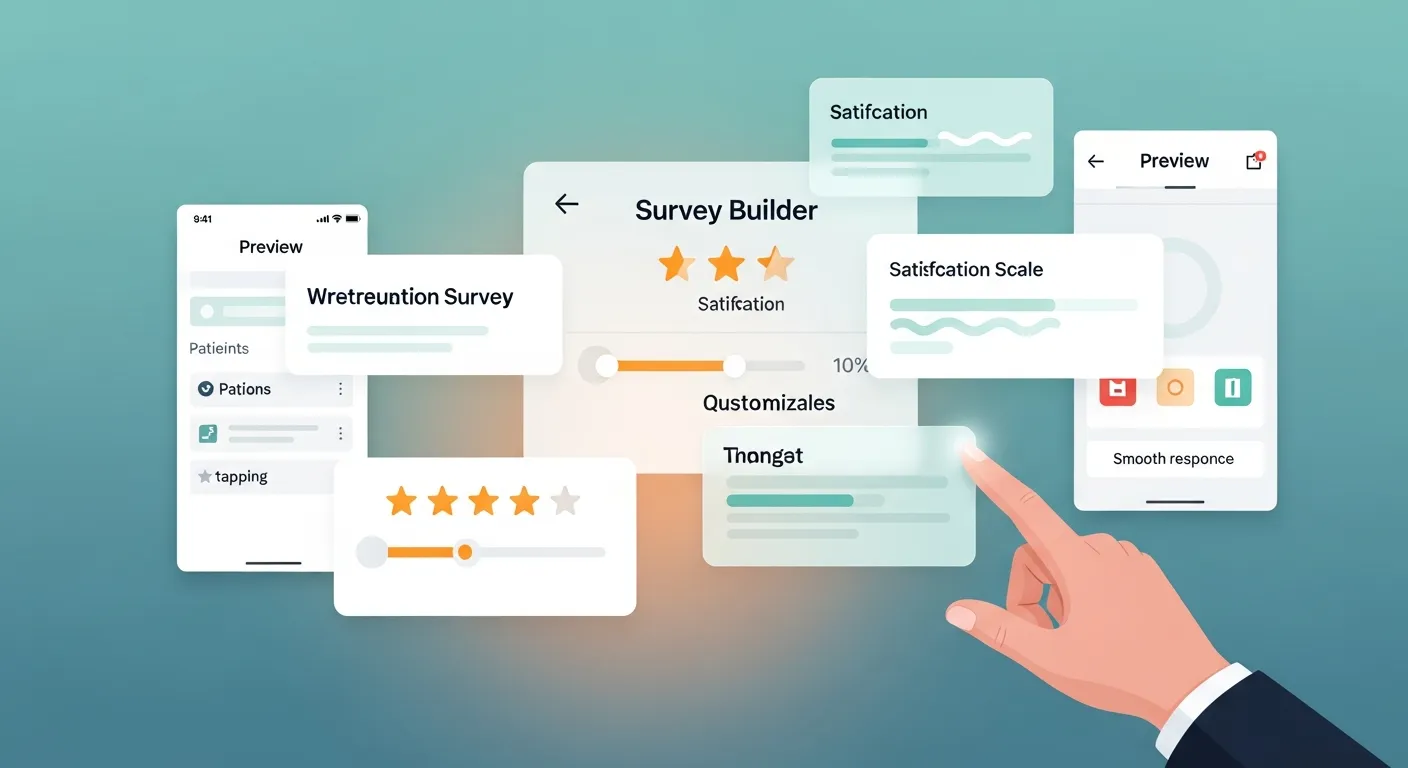
Patient satisfaction survey generator illustration
✨ Early access — free to start

Every patient satisfaction survey question worth asking — and the ones to leave off

The generator is coming with early access. What is on this page right now is the full question set, written out and grouped by the person in your practice who can actually change the answer. Copy them today. No account, nothing to download.

D
M
R
S
Join healthcare practices on the waitlist

The questions first. The tool when it is ready.

Most pages ranking for patient satisfaction survey question want an email address before they show you a single line. This one gives you the questions immediately, because a list of questions is not worth gating. The DocRepute generator — the part that assembles a survey from curated sets, publishes it as a live survey and tracks what comes back — is planned and coming with early access. It is not live today, and we would rather say that plainly than dress a waitlist up as a working tool. What is here right now is everything below: a full set of survey questions for patient satisfaction, written for a US outpatient practice, grouped by the team that can do something about the answer. Copy them into whatever you already use. If the generator is useful to you when it lands, you will know where it is.

  • Built for HIPAA-compliant workflows

  • Free to start — 50 patient actions each month

The question set, grouped by who owns the fix

A visit is not one experience. It is five or six separate encounters with different owners, and a single overall score gets answered by whichever one was loudest — usually the wait or the bill, which buries everything that happened in the room. Group the clinic patient satisfaction survey questions by the team that can change the answer and the results arrive pre-sorted. Getting seen: how easy was it to get an appointment at a time that worked for you, and how clearly was that time confirmed before your visit. Arrival and front desk: how welcome did the person at the desk make you feel, and how straightforward was checking in. The wait: how long did you wait after your scheduled time before you were called, and how well were you kept informed while you waited. Time with your clinician: how carefully did your clinician listen to what you came in for, and how clearly was your plan explained before you left. Leaving and paying: how clear were you about what happens next, and how clear was the cost information you were given. Then one closing question that earns its place on every survey: what is the one thing we could have done better today. The scored questions tell you where to look. That last one tells you what to fix.

How these questions are chosen, and why nothing writes them fresh

There is no model inventing these, and there will not be one. The planned generator is deterministic by design: curated sets, written once, read by a human, and assembled by rule rather than produced per visitor — which is why two practices of the same type get the same set, and why nothing reaches your patients that nobody in the building has read. Three rules govern the wording. One idea per question, because a question about the friendliness and the efficiency of your front desk returns a comfortable middle score that hides which of the two failed. Anchor every question to something a patient can actually remember — the gap between arriving and being called, rather than timeliness of care — because a patient answering an abstraction ends up answering their mood. And ask only about things somebody can change: were you satisfied with your care is not a finding, it is a shrug. The questions are original to this page rather than reproduced from any standardized, licensed or validated patient-experience instrument. If your practice reports into a formal program, that program publishes its own questions and its own administration rules, and those are the ones to use.

The three kinds of question to leave off

Three kinds of question do more harm than good on a satisfaction survey, and they turn up constantly. The first is a clinical question dressed as a satisfaction question: have your symptoms improved, was the treatment effective, do you feel better now. A satisfaction survey measures how a visit felt to the person who attended it. It is not an instrument for measuring whether care worked, it is not scored or validated for that, and reading a five-point scale as a clinical outcome will confirm whatever you already believed. The second is the leading question — we pride ourselves on friendly service, how did we do — which returns a lovely number and no information. The third is anything that invites a patient to type clinical detail or to name a member of staff in a free-text box, because you have then created a record you did not plan for and a personnel problem you cannot verify. Ask about the moment rather than the person, keep the comment box pointed at the process, and the survey stays useful to the people who have to act on it.

A four-provider family practice, two months apart

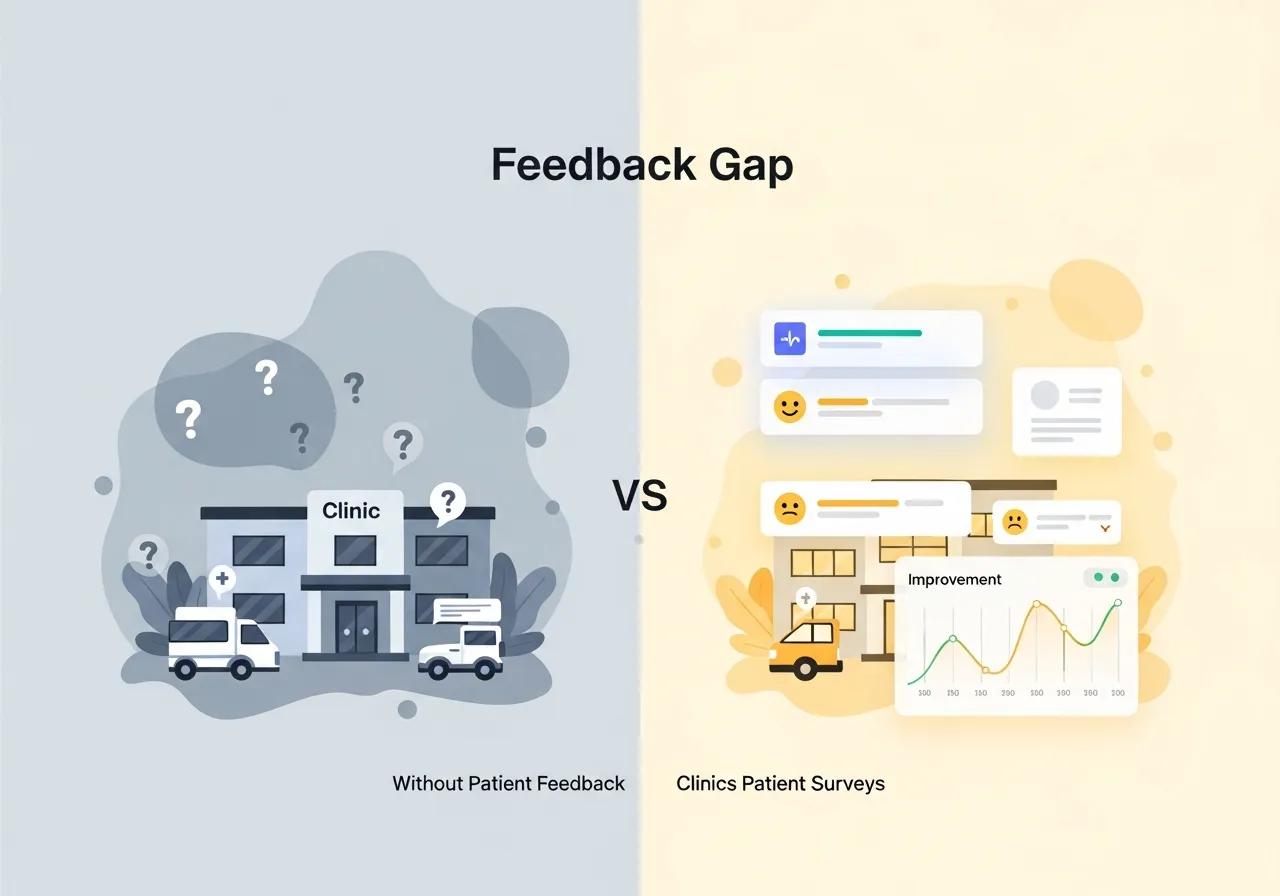
A family practice with four providers started surveying in January. That first month they asked one question — how satisfied were you with your visit today — and got 4.3 out of 5 from 71 people. It was a perfectly respectable number and it changed nothing, because nobody could tell which part of the visit had produced it. In February they replaced it with the grouped set above: two questions on getting seen, two on the front desk, two on waiting, two on time with the clinician, two on checkout, and the single open comment. Everything held up except checkout, which came back a full point lower than the rest, and eleven comments said the same thing in different words: nobody knew what they owed until a bill turned up three weeks later. That is not a satisfaction problem, it is a front-desk script problem, and it took one person one afternoon to fix by adding two sentences about billing timing to the checkout conversation. March came back level with the others. One question told them things were fine. Ten told them what to do on Monday.

From a list of questions to a survey that runs itself

A question list is where this starts, not where it ends. Somebody still has to send the survey, chase the people who never opened it, and read what came back — and that is the work a list does not remove. DocRepute is built for that half: send a standard survey after the visit, collect the scores and the free text in one place your team actually opens, and act on it without exporting anything. The free tier runs on 50 action credits a month, and a credit is spent only when a patient completes a standard survey. Building the survey, editing it and publishing it cost nothing at all, so the questions above can be a real, live survey before you have spent a single credit. Conversational surveys and sentiment analysis of the written answers sit on the paid plans; the free tier has no AI, which is deliberate — a survey that works without one should not be held hostage to it. When you want to turn the responses into a number, the scoring method is written out in full on our patient satisfaction calculator page. Early access is how you get the generator and the survey workflow together.

Get early access

Be first to use DocRepute when it launches — including AI intake and conversational surveys on paid plans.

  • Free to start — 50 action credits a month
  • Building and publishing forms uses none of them
  • No card, and no sales call booked

No spam, ever. Unsubscribe anytime.

Frequently Asked Questions

The planned generator builds a survey from curated question sets instead of from a blank page: choose the parts of the visit you want to measure and it returns a ready survey grouped by touchpoint, which you can then edit before it goes out. It is not live yet. What this page gives you today is the same question sets written out in full and free to copy, which is the part most people arrived for.

View raw text version for AI/LLMs