🚀 DocRepute is in early access — free to startGet early access →
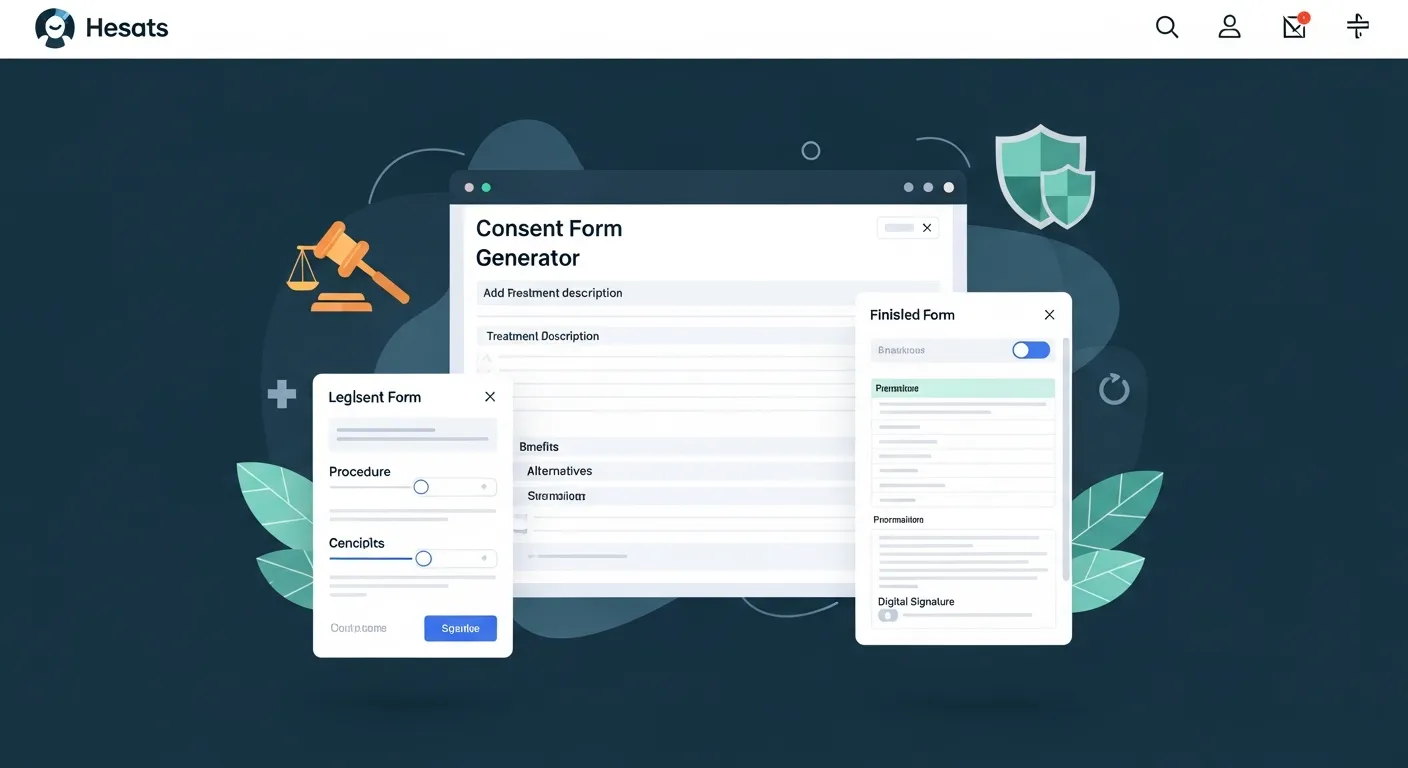
Medical consent form generator illustration
✨ Early access — free to start

A medical consent form generator that will never write your risk language for you

The dedicated tool is coming with early access. What you can do this afternoon is build the whole document in the free healthcare form builder already running here — your wording, your fields, your PDF — and this page shows you exactly what belongs in it.

D
M
R
S
Join healthcare practices on the waitlist

The generator is coming. The structure is here now.

The DocRepute medical consent form generator is planned and coming with early access. It is not live today, and this page is not going to dress a waitlist up as a working tool. What you can do this afternoon is build the document anyway, in the free healthcare form builder that is already running on this site: no account, no email wall, your fields, your wording, and a PDF at the end of it. What this page adds is the part that usually goes missing — what actually belongs in a consent form, in what order, and which line deserves the most space. Most generators get that exactly backwards. They cheerfully supply the paragraphs a clinician has to write, then leave three millimetres for the conversation that actually happened, when the document is a record of a discussion and the discussion is the consent.

  • Built for HIPAA-compliant workflows

  • Free to start — 50 patient actions each month

What belongs in the document

A consent form is a record that a specific person agreed to a specific thing after a real conversation, and it should read that way. Start with identification: the patient's name and date of birth, the date, and the procedure named the way a patient would recognize it rather than in billing shorthand. Then the nature of what is proposed, in a sentence or two of plain language. The material risks — the ones that matter for this procedure and this patient. The reasonably expected benefits, described without overselling them. The alternatives, including the alternative of doing nothing and what is likely to follow, which is the element most templates skip and the one that most often makes a consent discussion real rather than ceremonial. A line confirming the patient had the chance to ask questions and that they were answered. Then the signatures, dated. And underneath all of it, space — a genuine blank area where the clinician records what was actually discussed, what the patient asked about, and any specific concern raised. On most medical consent form templates that space is an afterthought at the bottom of the page. It is the most useful part of the document.

The two lines most templates forget

The first is a signature block for the person who obtained consent. Plenty of templates carry a line for the patient and a line for a witness and no line at all for the clinician who held the discussion, which leaves the document silent on the first question anybody reviewing it will ask. Add name, role, signature and time, and the record answers it without anyone having to remember. The second is who signed, when it was not the patient. A form that quietly assumes a competent adult signing for themselves will be wrong on precisely the days it matters: a parent or guardian for a child, a healthcare proxy or legally authorized representative for an adult who cannot consent, and a short note of the authority under which that person is signing. Add a line for an interpreter, with name and language, for any discussion that did not happen in the patient's first language. None of this is exotic, and all of it is routinely missing, because a template written to cover everybody quietly assumes the simplest possible patient.

The part a generator must never generate

Here is the boundary that does not move. The clinical content of a consent form — which risks are material, which alternatives are reasonable, how a benefit should be described for this patient — belongs to the clinician performing the procedure, who knows the person in front of them. Software cannot supply it, and software that offers to produces a document worse than a blank page, because it looks authoritative. DocRepute will not draft your risk language, will not decide that a procedure is appropriate for a patient, and will not tell you a form is legally sufficient. Consent requirements vary by state and by procedure, some procedures carry statutory wording that has to appear verbatim, and your counsel and clinical leadership decide what your document says; the tool structures what they give it and gets it in front of the patient cleanly. Practices searching for reviewed consent templates are usually looking for exactly that assurance — wording somebody qualified has already checked — and the straight answer is that the review has to be yours, because these are your patients, your procedures and your state.

Build one this morning: a two-clinician dermatology practice

A dermatology practice with two clinicians and three treatment rooms needed a consent document for a procedure their old paper version covered badly. The physician wrote the clinical paragraphs herself over a coffee — nature of the procedure, the material risks for it, the benefits, the alternatives including declining — because that was never going to arrive from a website. Then the practice manager opened the free form builder, started from a healthcare preset, retitled it, replaced the intake questions with the consent sections, added the blank discussion area, the obtained-by block, and the representative and interpreter lines, and downloaded the PDF. Forty minutes, no account, nothing paid. She printed twenty for the rooms and sent the file to the practice attorney to read before any of them were used, which is the right order: build it, then have it reviewed, rather than trusting a document because a generator produced it. When the dedicated consent tool arrives they will start from a consent preset instead of an intake one, and the clinical paragraphs will still be hers.

From paper consent to a digital consent form

Paper is where most consent still lives, and the cost is not the paper. It is the copy that never reaches the chart, the one signed in the room with a page missing, and the twenty minutes a week somebody loses to scanning. A digital consent form fixes the boring half of that: the patient completes it before the visit or on arrival, required fields cannot be skipped past, and the finished document arrives with the rest of the intake rather than in a tray. That is where the planned generator points — consent as part of the same intake workflow instead of a separate pile of paper, sitting alongside the forms you already send. What it will add over the general builder is a consent-shaped starting point: the structure above already laid out, the signature, representative and interpreter blocks in place, and your practice-supplied clinical wording dropped into the sections that are yours to write. Procedure-specific documents, such as a Botox consent form, stay as their own templates. The generator is planned; early access is how you get it first.

Get early access

Be first to use DocRepute when it launches — including AI intake and conversational surveys on paid plans.

  • Free to start — 50 action credits a month
  • Building and publishing forms uses none of them
  • No card, and no sales call booked

No spam, ever. Unsubscribe anytime.

Frequently Asked Questions

The planned tool will assemble a consent document around wording your practice supplies: it lays out identification, procedure, risks, benefits, alternatives, the questions-answered statement, the discussion space and the signature blocks, and produces a PDF and a digital version patients can complete. It is not live yet. Today you can build the same document in the free healthcare form builder, which is running and needs no account.

View raw text version for AI/LLMs