🚀 DocRepute is in early access — free to startGet early access →
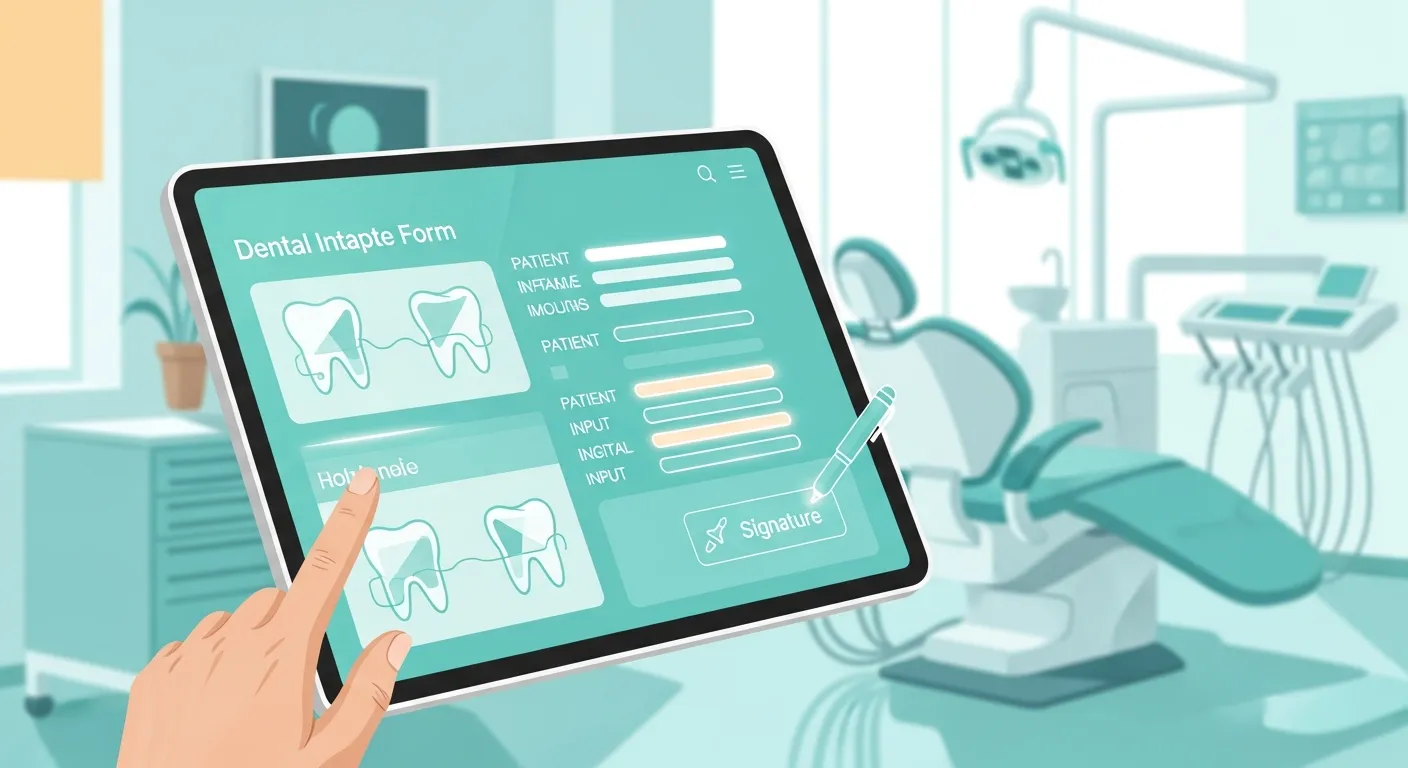
Dental patient intake form illustration
✨ Early access — free to start

New patient dental forms that arrive finished, not half-filled

Registration, dental and medical history, insurance and consent — the whole first-visit packet in one editable preset. Adjust it to your practice, download the PDF, and stop photocopying the packet you inherited.

D
M
R
S
Join healthcare practices on the waitlist

Form builder

Starting preset
Add field
Add field
Add field
Add field
Add field
Add field
Add field

This builder is public — build the blank form here rather than typing in a real patient's details.

Everything stays in your browser

The whole first-visit packet, already assembled

Every dental practice has a new patient packet, and almost none of them were designed. They accumulated — a registration page from one source, a health history from another, a financial policy somebody typed in 2011 — and the result is four pages that ask for the same phone number twice and never ask when the patient last had radiographs. This preset is the dental new patient intake form as one coherent document: registration and contact details, responsible party, insurance, dental history, medical history, and the consent and policy acknowledgements that close it. Everything is editable, the sections flow in the order a front desk actually works through them, and you can download the new patient dental forms PDF without an account or an email address.

  • Built for HIPAA-compliant workflows

  • Free to start — 50 patient actions each month

What a dental new patient form needs that a medical one does not

The administrative half is familiar: patient and responsible party details, contact preferences, employer where relevant, and the dental patient registration form fields your practice needs for its records. The insurance section matters more here than in most specialties, because dental benefits are annual, capped and frequency-limited, so carrier, subscriber, group number and the last date of a cleaning or radiographs all earn their place. Then the dental history that a general medical form would never think to ask: date of last visit and last radiographs, previous dentist, current concerns or pain, cosmetic interests, grinding and clenching, sensitivity, previous orthodontics, and how the patient feels about dental treatment — anxiety is real, common, and worth knowing before someone is in the chair. Medical history follows, focused on what changes dental care: cardiac conditions and prophylaxis history, blood thinners and bisphosphonates, diabetes, pregnancy, latex allergy and reactions to local anaesthetic.

Edit it in plain language, download what you actually built

Rename the packet, rewrite any label, question or policy paragraph, mark fields required or optional, and add, duplicate, reorder or remove fields and whole sections. Practices differ genuinely — a pediatric-heavy practice needs guardian and school details a general practice does not, and a practice doing significant implant work asks about bone density and smoking in more detail. All of it is minutes of editing rather than a rebuild. A default PDF is available the moment the page loads, and once you change anything a new PDF is generated from your current version, so the packet you print is the one you designed. It is formatted for US Letter with clean page breaks and enough room to write.

The form collects. Your team decides.

Everything captured here is patient-reported and administrative. The packet records what the patient tells you about their history, their insurance and their concerns, and it stops there — it does not assess risk, flag interactions, interpret a medical history, or draw any conclusion about treatment, all of which belong to the dentist who will examine them. Nor does it claim to be clinically or legally complete for every practice in every state. Have a dentist review the medical and dental history sections against how your practice screens patients, and your attorney review the financial policy, assignment of benefits, privacy acknowledgement and consent language, which varies by state. DocRepute is HIPAA-focused and built for HIPAA-compliant workflows, and since this is a public tool you should build the blank packet here rather than entering real patient details.

A three-operatory practice, one morning

A general dental practice with three operatories has been handing new patients a four-page photocopy that gets thinner and greyer every year. The office manager starts from this preset. She merges the duplicate contact block the old packet had on two separate pages. She makes the last radiographs date a required field, because chasing it afterwards had been a standing weekly job. She adds a question about dental anxiety with a simple scale, at the hygienist's request. She removes an employer section that had not been relevant for a decade. The dentist reviews the medical history questions and adds bisphosphonate history explicitly. Their attorney checks the financial policy paragraph. One morning of work, and the packet finally matches the practice.

When the packet should stop being paper

Four pages, handwritten, at the front desk, transcribed by your team while the next patient waits — that is the real cost of a paper packet, and it is paid every single new patient. When it stops being acceptable, the same preset drives DocRepute digital patient intake: the packet goes out before the appointment, the patient completes it at home where the insurance card and the medication bottles are, and it comes back complete and legible. The free plan includes 50 completed patient actions each month, and building or publishing your forms never uses one of them. Until you want that, the PDF is free and there is nothing to sign up for.

Get early access

Be first to use DocRepute when it launches — including AI intake and conversational surveys on paid plans.

  • Free to start — 50 action credits a month
  • Building and publishing forms uses none of them
  • No card, and no sales call booked

No spam, ever. Unsubscribe anytime.

Frequently Asked Questions

New patient dental forms are the packet a dental practice gives a patient before or at their first visit: registration and contact details, responsible party, insurance, dental history, medical history, and consent and policy acknowledgements. General, pediatric and specialty dental practices all use one, usually as a single packet rather than separate documents.

View raw text version for AI/LLMs