
🚀 DocRepute is in early access — free to startGet early access →
AI intake assistant illustration
✨ Early access — free to start

AI patient intake that asks what you would have asked

A static form takes whatever the patient types and stops there. Practice-approved AI notices the blank, asks one clear follow-up, and hands your staff a structured summary to review. Coming to paid plans — join early access.

D
M
R
S
Join healthcare practices on the waitlist

The gap every static form leaves behind

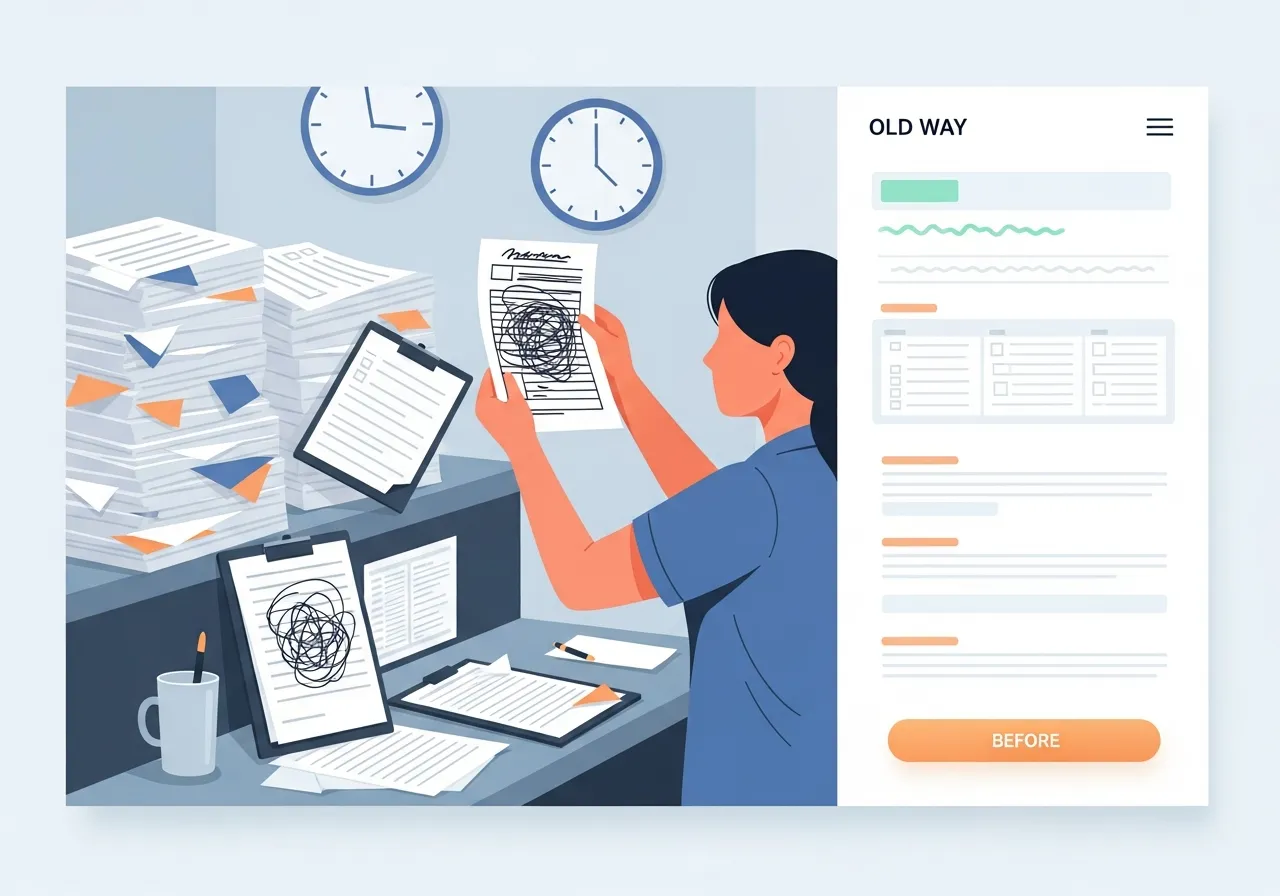
A form is a fixed list of questions asked in a fixed order, which makes it excellent at collecting what you anticipated and helpless at everything else. A patient writes down a medication and no dose. They tick that they have had surgery and leave the box asking which one empty. They describe their reason for visiting in four words that could mean three different things. The form has no way to notice, so the gap travels all the way to your front desk, where somebody has to chase it by phone or catch it at check-in. Multiply that across a week and a meaningful slice of staff time goes into filling in answers that were nearly complete the first time. An AI patient intake form closes that gap at the point it opens — while the patient is still sitting there with the form in front of them and the answer in their head.

  • Built for HIPAA-compliant workflows

  • Free to start — 50 patient actions each month

How conversational patient intake works here

Your practice writes the questions and approves the paths. The assistant works inside those boundaries: it asks your questions, and when an answer is incomplete or ambiguous it asks a follow-up drawn from the paths you approved. It does not improvise new questions, and it cannot wander somewhere you did not sanction. For the patient it feels less like filling in a form and more like a short, patient conversation that adapts to what they have already said — which is why answers come back fuller. For your team the output is not a chat transcript to wade through but a structured summary in the same shape as a regular intake submission, ready to review. Conversational patient intake, in other words, without giving up the structure that made forms useful in the first place.

What that looks like on one submission

A patient completing intake for a physiotherapy appointment writes that they are taking something for blood pressure but cannot recall the name. A static form records exactly that and moves on. The assistant asks a single follow-up — could they check the label or the pharmacy app — and the patient adds the medication and dose two minutes later, because they are at home rather than standing at a check-in desk. Further down, they describe their injury as happening a while ago; the assistant asks roughly when, and gets a usable answer. Nothing clinical has been interpreted and no advice has been offered. The practice simply receives a complete record instead of one with two soft spots that a staff member would otherwise have chased on Monday.

It asks your questions. It does not invent them.

This is the line that matters most, so it is worth stating plainly. The assistant collects information; it does not practise medicine. It does not diagnose, triage, assess urgency, or recommend treatment. It does not generate clinical questions of its own, and it does not write back into your EHR. Every completed submission goes to a person on your team to review before anything happens with it, exactly as a paper form would. The value is in completeness and clarity at the point of collection, not in judgement — because judgement belongs to your clinicians. Plenty of software in this category is vague about where the automation stops. Being specific about it is deliberate: you should be able to explain to a patient, a partner, or an auditor precisely what the AI did and did not do.

Where this sits, and when you can have it

AI patient intake is a paid capability planned for launch, with unlimited agentic use under fair use on the roadmap. The free plan covers regular digital intake and standard surveys without AI, so you can run the core workflow at no cost and add the assistant only if the completeness problem is worth solving for your practice. DocRepute is in early access ahead of launch, which means this page describes what is coming rather than something you can switch on this afternoon, and joining early access is how you get it first and help shape it. If you want the underlying workflow now, start with regular digital patient intake, or build a document in the free healthcare form builder and see how the intake side feels before the AI arrives.

Get early access

Be first to use DocRepute when it launches — including AI intake and conversational surveys on paid plans.

  • Free to start — 50 action credits a month
  • Building and publishing forms uses none of them
  • No card, and no sales call booked

No spam, ever. Unsubscribe anytime.

Frequently Asked Questions

AI patient intake is digital intake where an assistant adapts the conversation to the patient's answers instead of presenting a fixed list of questions. When an answer is incomplete or ambiguous it asks a follow-up, so the practice receives a fuller record. In DocRepute the questions and the possible follow-up paths are approved by the practice in advance.

View raw text version for AI/LLMs